Fewer, better messages to your customers
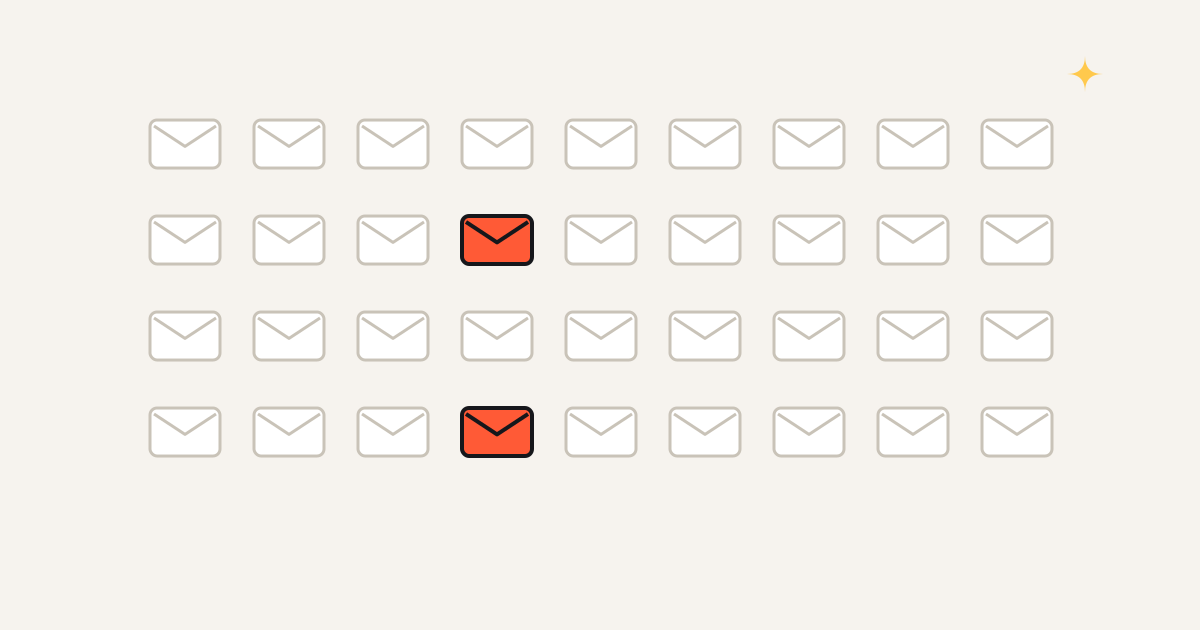
Most B2B inboxes now receive more vendor email than anyone can read. A large share of it is written by software, sent by software and meant to be skimmed by software. The cost of producing one more message has dropped close to zero, so volume keeps rising, and every message competes with all the others for the same few minutes of attention.
For revenue and customer success teams this changes the math. A generic sequence used to be cheap and mildly effective. Today it is still cheap, and its effect keeps shrinking, because buyers have learned to ignore anything that looks automated. What still gets read is a short note from a person the customer already knows, about something that is true for that customer.
This post covers why that is, and what it means for how often you write to an account and what you write about.
Buyers still want reps, for specific moments
Gartner has reported that a growing share of B2B buyers say they prefer a rep-free buying experience: 61% in its 2025 survey and 67% in its 2026 survey. Read alone, that sounds like an argument for sending fewer human messages and more automated ones.
The same research points the other way on a narrower question. In a May 2026 release based on a survey of 645 B2B buyers, Gartner found that 69% turn to sales reps to validate AI-generated insights. Gartner's analyst put it this way:
Buyers still rely on sales reps when they need reassurance, context and decision support.
Buyers do not want to be chased. They do want a person who knows their account to tell them when something matters to them. The first kind of message is getting easier to ignore. The second is getting more valuable, because there is less of it.
What volume costs you
Sending too much has a measurable price, and the mailbox providers set it.
Google's email sender guidelines ask all senders to keep the spam rate reported in Postmaster Tools below 0.10% and to avoid ever reaching 0.30%. Senders of more than 5,000 messages a day to Gmail must keep it below 0.30% and must support one-click unsubscribe on marketing and subscribed messages. Yahoo's sender best practices set the same 0.3% ceiling and require bulk senders to honor unsubscribes within 2 days.
Those thresholds are small. A customer who marks your release email as spam is one data point against your domain, and the domain is shared: the CSM's renewal note and the AE's proposal go out from it too. When a product team sends every change to every contact, the people who do not care are the ones who click "report spam" or "unsubscribe". Each of those clicks makes the next important message less likely to land.
Trust follows the same curve. If a customer has learned that most of your updates have nothing to do with them, they stop opening the ones that do. You can recover a bounced address. Winning back an account that tuned you out takes much longer.
Two controls: a cap and a gate
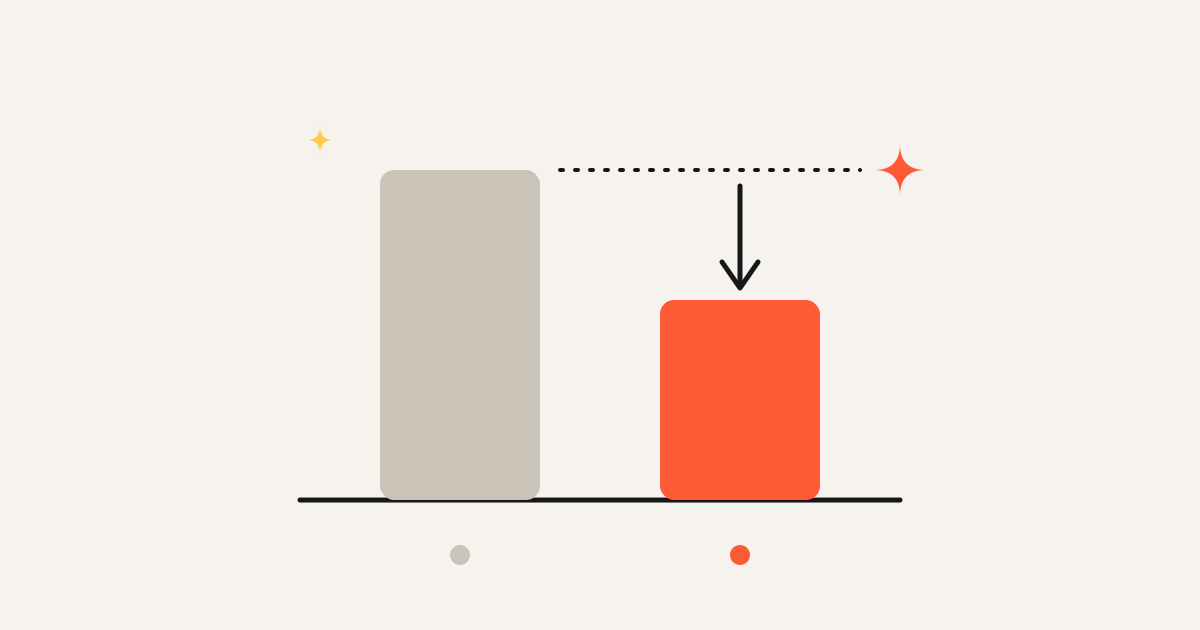
Better copy at the same volume does not fix this. Changing the rules for what gets sent does, and two controls do most of the work.
A frequency cap. Set a hard limit on how many messages one person can receive from you in a week, across all senders on your team. Cheerblast uses a cap of two per person per week. The number matters less than the fact that it is enforced and shared. Without a shared cap, the CSM, the AE and the product marketing team each make a reasonable decision on their own, and the customer gets five emails in four days.
A relevance gate. Before a message is drafted at all, check whether the change actually touches this account. If it does not, the account gets nothing. The gate runs before the writing step, so the question is "should this person hear about this?" and only then "how do we say it?"
What "relevant" means in practice
"Relevant" is easy to claim and hard to define, so it helps to make it concrete. For a product change, a message is worth sending to an account when at least one of these holds:
- They have it. The change is in a module, plan or integration the account pays for. A fix to the Salesforce sync means nothing to an account that runs HubSpot.
- They use that part. Having a feature and using it are different. If the account's users open the reporting screens every day, a reporting change is news to them. If nobody has opened them in six months, it probably is not.
- They asked. Someone at the account filed a ticket, voted on a request or raised it on a call. Telling them it shipped closes a loop they opened, and it is the easiest message to get right.
- It answers their deal. For prospects, a change that removes an objection from an open opportunity is relevant to that deal and to nobody else in the pipeline.
Each of these can be checked against data your team already has: the contract, product usage, the support queue, the CRM. None of them depends on a guess about what the customer might find interesting.
A hypothetical example: a team ships faster CSV exports. Under a relevance gate, the twelve accounts whose admins export weekly get a short note from their CSM, two of them with a line about the ticket they filed. The three prospects who raised export speed in a demo get a note from their AE. Every other account hears nothing about it this week.
Why silence is the point
That last line is the part teams find hardest to accept. Shipping something and telling only a small slice of the customer base can feel like waste. It is the reason the program works.
When most accounts hear nothing about most releases, the messages they do get carry information. A customer who receives one note a month from their CSM, and finds it useful each time, reads the next one. The same customer receiving a weekly digest of everything learns to archive it unread.
Silence also protects the sender. Reps and CSMs are rightly protective of their relationships, and many will not put their name on a message they do not believe in. A system that only asks them to send notes that are true and useful to the account gets their approval. One that asks them to forward a newsletter does not.
The practical test for any customer message is simple: would the rep be comfortable if the customer replied "why did you send me this?" If the honest answer is "because you asked for it" or "because you use this every day", send it. If the answer is "because it shipped", hold it.
Putting it together
Write to fewer people, less often, about things that are true for them, from someone they know, with a person approving each message before it goes. That approach costs some reach on paper. In return your domain stays healthy and your customers keep reading.
Cheerblast does this as value distribution: it reads what your product team shipped and drafts the few messages that matter, from the right rep, for approval.