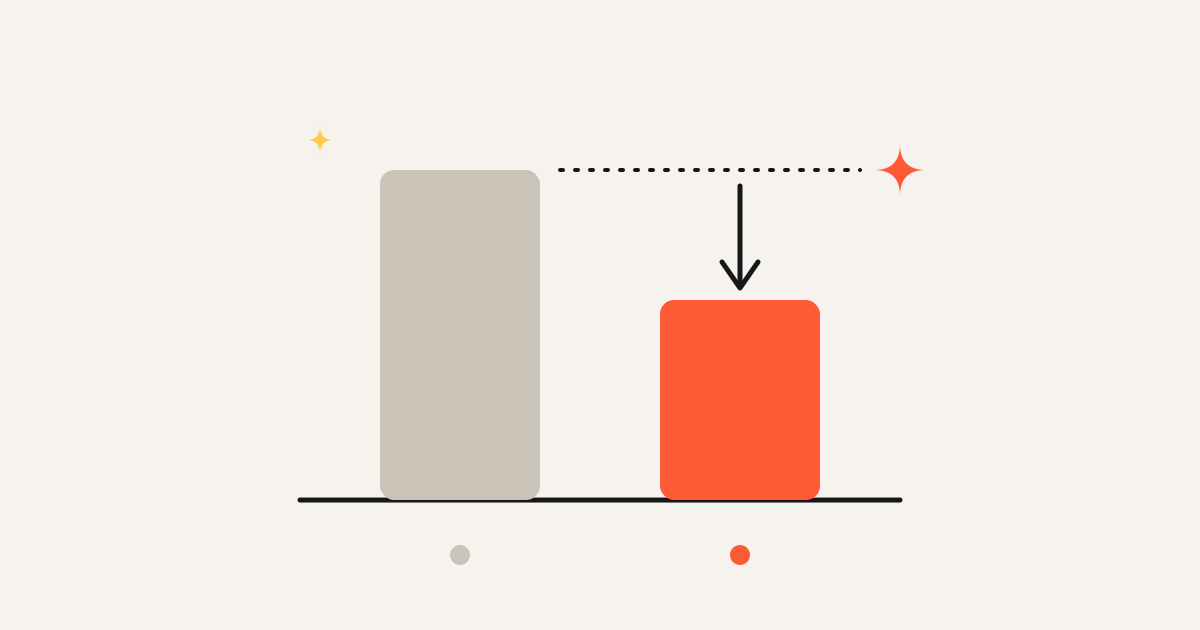
AI moved the bottleneck from building to adoption
For most of the history of B2B software, the expensive part was building. A feature took a quarter, a team and a roadmap fight. Because each one was expensive, each one got a launch: a blog post, a webinar, an email to the whole customer base, a slide in the next QBR deck.
AI coding tools have changed the cost side of that equation. The go-to-market side mostly hasn't caught up. This post looks at what actually changed, what the research does and doesn't say, and what it means for the people who own revenue after the sale.
What the research says about AI and delivery
The most careful data point here is Google's 2025 DORA State of AI-assisted Software Development report, based on a survey of nearly 5,000 technology professionals. Its key findings are worth reading closely, because they are more measured than the headlines built on them.
- 90% of respondents use AI as part of their work, and more than 80% believe it has increased their productivity.
- 30% report little to no trust in the code AI generates.
- AI adoption now improves software delivery throughput, which DORA calls "a key shift from last year." DORA measures throughput through lead time for changes, deployment frequency and recovery time from failed deployments.
- AI adoption still increases delivery instability. In DORA's words, "while teams are adapting for speed, their underlying systems have not yet evolved to safely manage AI-accelerated development."
Note what the report does not claim. It does not say AI multiplies deployment frequency by some fixed factor, and it frames AI as an amplifier: it magnifies the strengths of well-run organizations and the problems of struggling ones. The fair reading is narrower and still important. Across a large sample, teams using AI are moving more changes into production than before, and the change units are getting smaller and more frequent.
That second part is the one go-to-market teams should pay attention to.
Where the slow part went
If building gets cheaper, something else becomes the constraint. In most software companies, that constraint is now the step between "it's in production" and "the customer who needed it knows it exists and is using it."
This was already a weak point before AI. Pendo's 2019 Feature Adoption Report, based on usage data across its customers' products, found that 80 percent of features in the average software product are rarely or never used. That data is several years old and comes from one vendor's customer base, so treat it as a signal rather than a law. But the direction is hard to argue with, and nothing about AI-assisted development makes the problem smaller. More output into the same adoption funnel means more features that nobody hears about.
The economics also flip. When a feature took a quarter to build, a week of launch effort was a small add-on. When a fix or improvement takes an afternoon, the same week of launch effort costs more than the thing itself. So teams quietly stop doing it. The change ships, the release notes get a line, and the account that asked for it six months ago finds out by accident, or doesn't.
Why launch playbooks don't scale down
Launch playbooks were designed for a few big moments a year. They assume a single message that is relevant to most of the customer base, a fixed date, and enough lead time for marketing, enablement and CS to prepare. That works for a new product line. It breaks for the kind of change AI-assisted teams now ship most often.
Consider a typical week in a mid-size software company:
- An export now supports a field that two enterprise accounts asked for in support tickets.
- A performance fix removes a timeout that one account hits during month-end close.
- An integration gains a setting that unblocks a stalled deal in the pipeline.
- A permissions change matters to every customer on a specific plan, and to nobody else.
None of these deserves a launch. Each of them matters a lot to a handful of specific accounts, and very little to everyone else. A broadcast email about the export field is noise to 95% of recipients, and the five people it was written for will probably skim past it with the rest of your newsletter. Multiply that by dozens of changes a month and you have a choice between flooding customers with irrelevant updates or saying nothing.
Most companies end up saying nothing, which is the expensive option. The value was delivered, but from the customer's side it never happened.
What this means for CS and sales leaders
For a CRO or VP of Customer Success, this is a revenue problem that shows up in the wrong place. Product thinks the work is done. The customer thinks the roadmap is stalled. At renewal, the CSM is defending a product the customer believes hasn't improved, while engineering shipped the exact fix they asked for in the spring.
A few practical shifts follow from that:
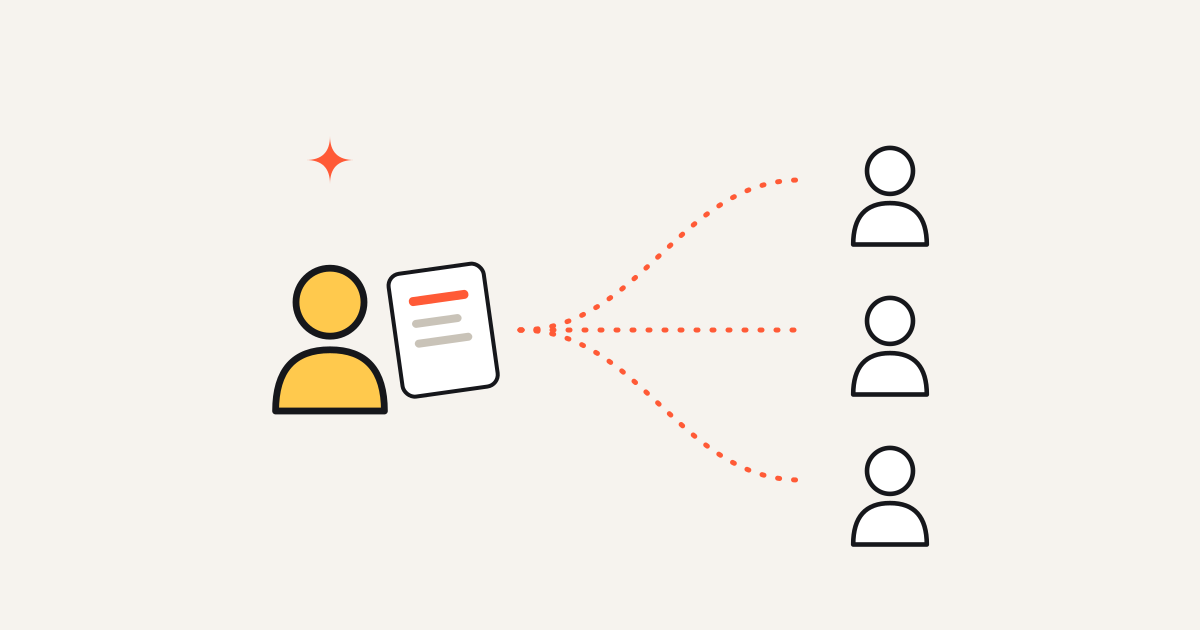
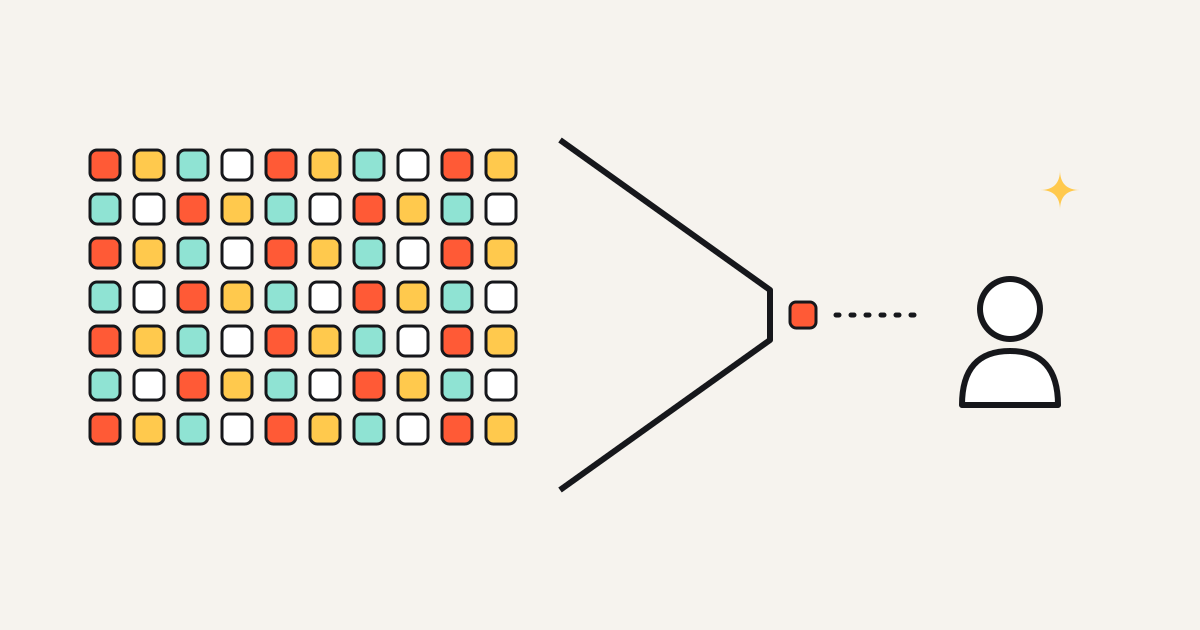
Match changes to accounts, not to segments. The question for each change is which specific customers and open deals it matters to, and why. The evidence is usually already in your systems: the ticket that requested it, the deal note that mentioned it as a blocker, the usage data that shows an account hitting the old limit.
Let the relationship owner deliver the news. A short note from the CSM or AE who knows the account lands very differently from a marketing email. "You asked about this in March, it's live now, here's how to turn it on" is a message people read and act on. It also gives the rep a legitimate reason to start a conversation.
Cap the volume per person. If every change triggers a message, you've rebuilt the noise problem with better targeting. Set a ceiling on how often any one contact hears from you, and when there are more relevant changes than slots, send the ones with the clearest value to that person.
Keep a person in the loop. The rep should see and approve what goes out under their name. They know when an account is mid-escalation, when the champion just left, or when a message would land badly this week. Automation can do the matching and drafting. Judgment about the relationship stays with the human who owns it.
Treat it as an ongoing process. Launches have a date. A steady stream of small changes needs a weekly rhythm, owned by someone, with the same operational discipline you'd give renewals or pipeline reviews.
The work that's left
AI did its part on the building side. DORA's own data suggests the systems around that speed are lagging, and the part of the company that turns shipped work into customer value is lagging further. The teams that benefit most from faster engineering will be the ones that close that gap: every meaningful change reaches the specific people it was built for, from someone they already trust, at a pace they can absorb.
We call that discipline value distribution. Cheerblast reads what your product team changed, works out which customers and prospects each change matters to, and drafts a short personal note from that account's own rep for them to approve.
If shipping got easy but getting customers to notice didn't, see how Cheerblast handles it.